
Watertown City Directory Collections
The Watertown Free Public Library supplies the primary local historical shelf. Its Local History & Genealogy page names town directories, poll-tax reports, resident lists, vital indexes, maps, newspapers, and yearbooks. Its public landing page verifies the collection ranges below, but it does not publish a complete year-by-year volume inventory or a publisher list. Check the library's specific shelf or scan before treating a missing year as a gap in a household's story.
| Collection | Years | Where Held | Access |
|---|---|---|---|
| Watertown Town Directories | 1869-1942 | Watertown Free Public Library; selected catalog and scan leads | Library collection; confirm exact volume, shelf, or scan |
| Waltham and Watertown combined directory | Documented 1871-72 title; other selected years | Library and catalog collections | Search both town names and confirm the book's scope |
| Poll Tax Reports | 1897-1929 | Watertown Free Public Library | Historical taxpayer evidence, not a whole-household list |
| Resident Lists | 1939-present | Watertown Free Public Library and City Clerk | Ask about recent-year access conditions |
| Birth, death, and marriage indexes | 1630-2009 | Watertown Free Public Library | Finding aid before contacting the certificate custodian |
Selected catalog leads also appear through the Massachusetts State Library, Boston Public Library, Waltham collections, and genealogy catalogs. Those leads are useful when a local book is not immediately available, but the Watertown Library collection controls the local holdings question.
Watertown City Directory Library Shelf
The Watertown Free Public Library Local History & Genealogy collection links its directory, poll-tax, resident-list, cemetery, vital-index, map, newspaper, military, and school resources from one local starting point. It provides a practical access chain when a printed directory has no online result: ask library staff about the physical holding, consult the linked collection, and then compare a name with local maps, annual reports, yearbooks, and newspapers.
The library landing page exposes collection links rather than a dedicated local-history-room schedule, copying rules, or complete obituary-index run. Confirm physical researcher access before a visit. Its digital collections include family, business, and community-memory material, which can add place and family context without replacing a directory entry.
The library local-history page visibly gathers the sources that make a Watertown city directory search more than a single surname lookup.
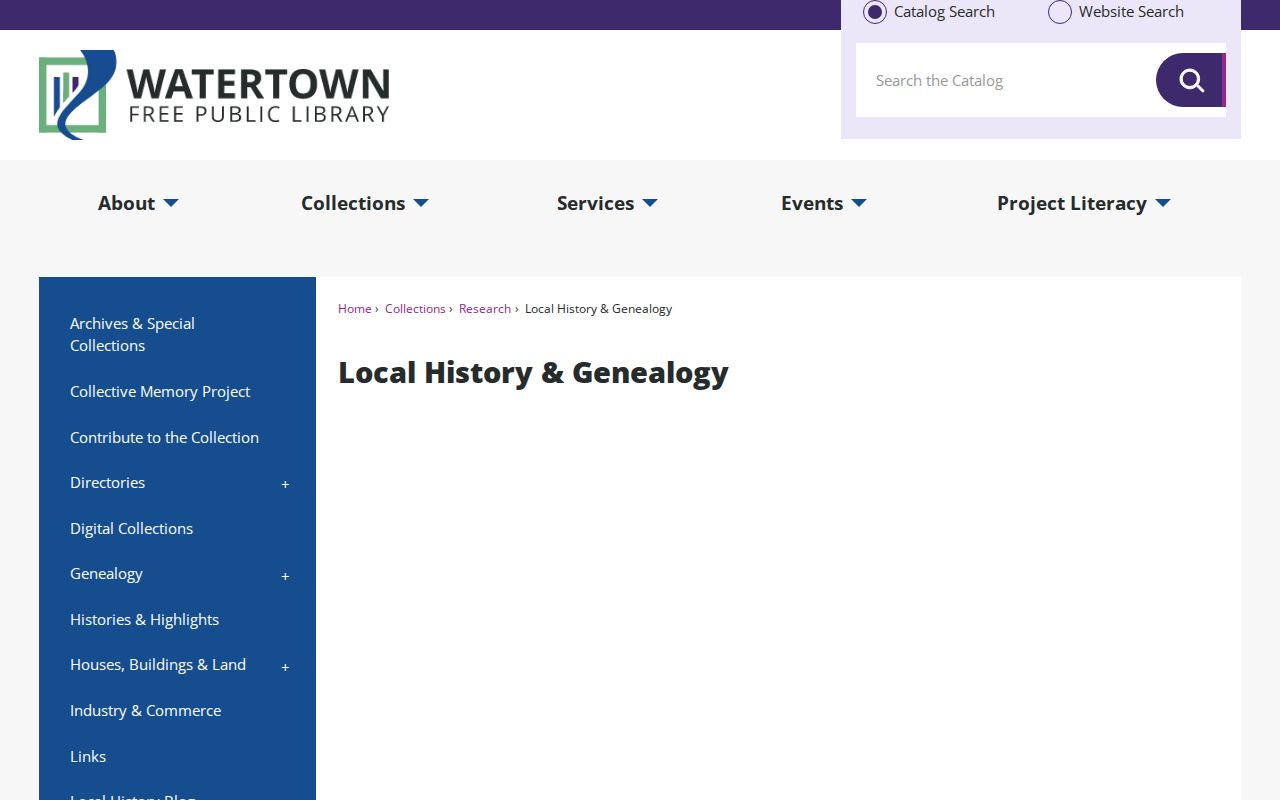
The collection links support a layered search through directories, resident lists, maps, and yearbooks while preserving each item's stated date range.
One Watertown City Directory, Two Towns
The documented 1871-1872 volume is titled Directory of the inhabitants, institutions, manufacturing establishments, business, societies, etc., etc., in the towns of Waltham and Watertown. That combined title is a useful local quirk. A Watertown name may be in a volume filed or cataloged under Waltham, and some Waltham directories include Watertown through 1923-24. Search both community names before deciding that a person is absent.
This is also a scope check. A combined volume can include residents, institutions, and businesses across two towns. Record the title page, publication year, town coverage, and page number with every transcription. It prevents a later researcher from mistaking a Waltham address or business entry for a Watertown household.
Watertown City Directory Companion Lists
Watertown's poll-tax reports cover 1897 through 1929 and can add adult taxpayer or civic context, but they are not complete all-person household records. Resident lists from 1939 to the present provide a later continuity bridge, though access conditions for recent years need confirmation. The Library's birth, death, and marriage indexes run from 1630 to 2009 and can supply event leads for a name found in a directory.
Maps should come before guessing at an old street. The Library groups historic maps by century. Newspapers, local-people collections, Watertown High and St. Patrick High yearbooks, annual reports, and town-meeting material are further companion sources. Use each one for the type of fact it actually records. A cemetery listing or vital index may help identify a death or family link, while a directory helps establish a printed address at a specific time.
Note: A poll-tax report is historical taxpayer evidence, so it should not be treated as a complete Watertown family directory.
Watertown City Directories Online Paths
Watertown Library's ContentDM digital collections contain photographs and family, business, and community-memory material. The featured Conti Family Farm collection ties a family history to Brookline Street from roughly 1920 to 2022, with a 1940-1955 bulk period. It is a strong place-and-family bridge, not a universal name index. Selected digital directory availability likewise does not establish a continuous online run.
The ContentDM collection landing page provides a direct visual route to Watertown material that can supplement, but not replace, the dated city-directory entry.
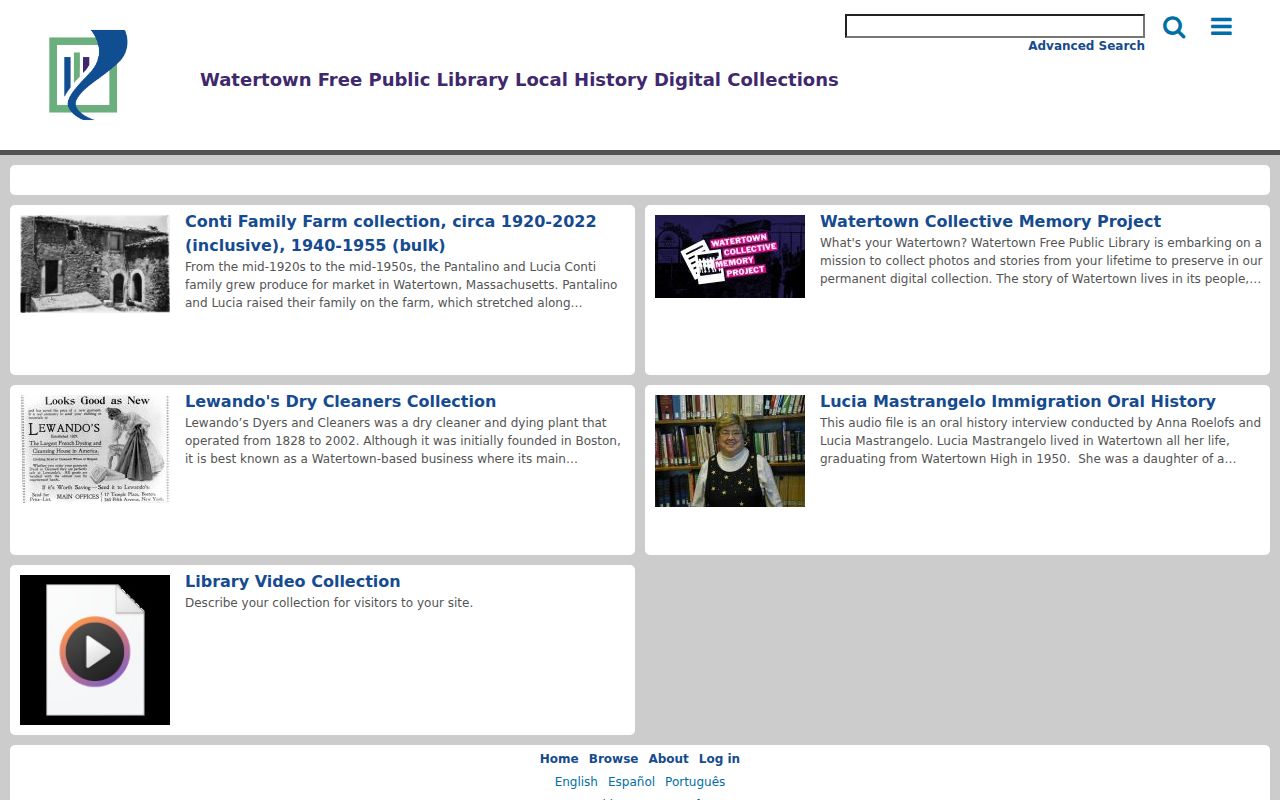
Use a digital family or place item to develop search terms, then confirm a residence claim in the correct directory, resident list, map, deed, or vital source.
Watertown City Directory State Leads
The Massachusetts State Library genealogy guide points researchers toward compiled vital-record volumes, the Zimmer index, Boston Public Library, New England Historic Genealogical Society, State Archives, RVRS, and NARA Northeast in Waltham. These are access channels for directory-adjacent family research when a local name needs an older record trail. The State Archives and RVRS split depends on record year, so the current custodian page should guide any certificate request.
The State Library genealogy guide shows the wider Massachusetts research network available after the Watertown city directory shelf has supplied a name, date, or address lead.
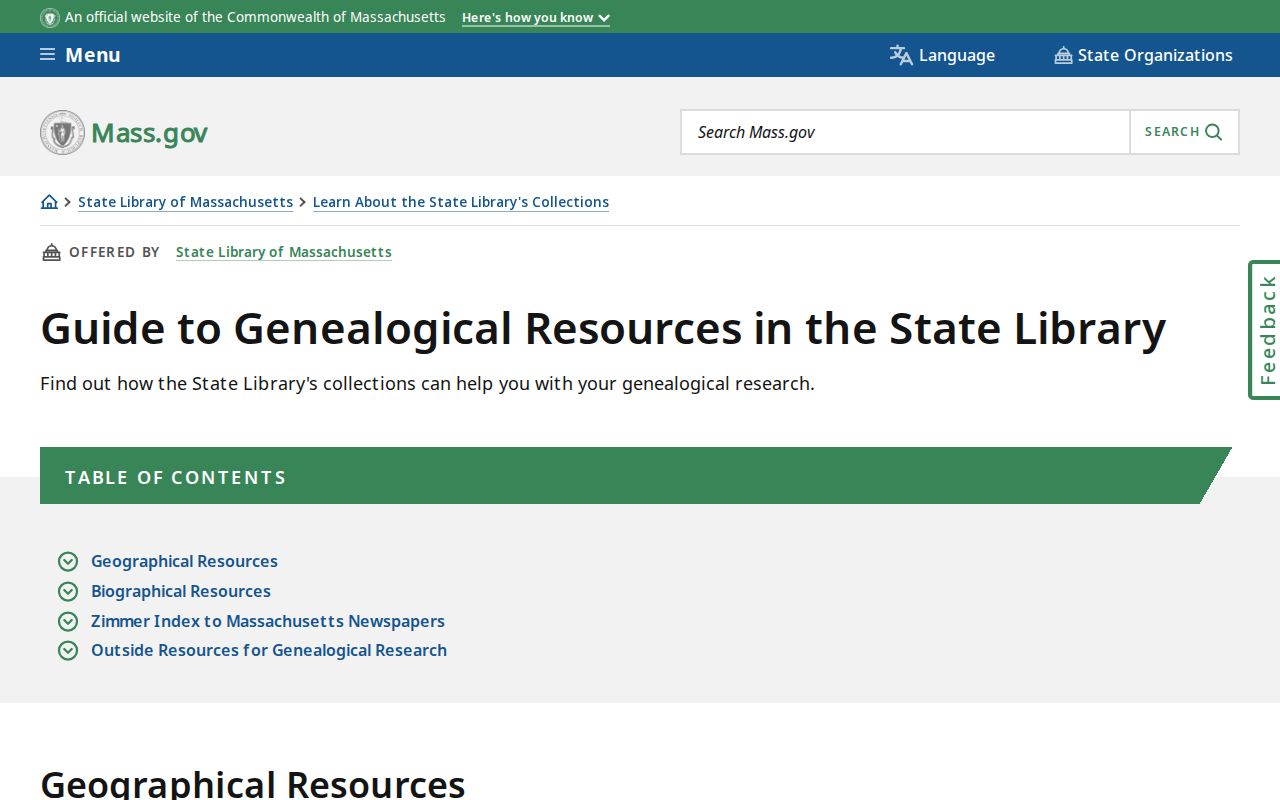
State-level indexes and repositories are best used to corroborate a dated local listing, not to fill an unverified directory year with assumptions.
Read a Watertown City Directory Entry
No individual Watertown directory scan was opened during the research, so the exact abbreviation key and conventions must be checked in the volume itself. The inventory below lists the fields to transcribe when a scan or physical page is open. It avoids assuming that every book uses the same owner, renter, spouse, or widow marks.
| Name | Transcribe the surname, given name, and initials exactly as printed. |
|---|---|
| Family notation | Record any spouse or widow notation only if that volume prints it. |
| Occupation | Capture the occupation and employer or business when supplied. |
| Address | Record house number and street exactly, along with the volume's town scope. |
| Section and source | Note resident, business, institutional, or street section, plus year, title, imprint, and page. |
- Criss-cross directory
- An address-first directory arrangement used to connect a street location to a listed occupant when a verified volume exists.
- Householder index
- A listing organized around the person or household named at an address, if the volume provides one.
- Abbreviation key
- The publisher's explanation of shortened marks and terms, usually near the front of the volume and essential to transcribe accurately.
Watertown City Directories and Maps
A city directory and a federal census answer different questions. A directory is a publisher's dated listing, sometimes with business or street sections. A census is a one-day household enumeration. Public federal census records currently run through 1950 under the 72-year rule. Pairing 1900, 1910, 1920, 1930, 1940, and 1950 census research with available directory years can reveal whether an address, spouse, occupation, or household composition holds together.
For building context, the Library of Congress holds Watertown's November 1916 Sanborn set, which contains 31 sheets. It shows structure footprints, use, construction, and hazards, not residents. Identify the correct sheet and adjoining sheet, then use the directory and deed trail to connect a printed name to a location.
Trace a Watertown Household Across Years
Follow a household one date at a time, and preserve uncertainty where the library's run is nonconsecutive. The best comparison fields are exact name spelling, initials, occupation, spouse notation, street number, town scope, and the page reference. An address move may be real, but a missing directory year, a combined Waltham volume, or a spelling variation must be checked before drawing that conclusion.
- Find the first usable Watertown city directory entry and record the volume title, year, page, name, address, and all printed context.
- Check the same name and address in each available later directory. Note first and last appearances, moves, and occupation or family changes.
- Use a verified street or house-guide section when one exists. If no local reverse directory is documented for the year, ask the library or area collections rather than assuming one.
- Compare the directory dates with resident lists, poll-tax reports, the matching federal census, deeds, permits, cemetery records, and vital indexes.
- Resolve similar names with spouse, occupation, address, cemetery, deed-party, and census-household evidence.
For a present parcel or a full address-keyed record chain, use the Watertown streets reference after the historical directory work establishes the right location and period.
Watertown City Directory Timeline
The documented dates below mark collection eras, not a promise that every annual volume survives or is online. They explain why a household trail often switches sources.
- 1630: Library genealogy indexes begin with Watertown's early local record era.
- 1869-1942: Watertown Town Directories are identified by the Library.
- 1871-1872: A documented Waltham and Watertown combined directory shows the cross-town cataloging issue.
- 1897-1929: Poll Tax Reports add a historical taxpayer layer.
- 1939-present: Resident Lists offer a later local continuity source, subject to access conditions.
Watertown City Directory Endpoint Checks
When a person disappears from a directory, a cemetery, obituary, probate, or vital-index search can provide a carefully dated endpoint. The Historical Society's Catholic Mount Auburn project reconciles Archdiocese books, a copied 1885-1947 notebook, vital records, FamilySearch, and cemetery mapping. Its work also documents missing burial intervals, including July 1882 through December 1884, so a negative cemetery search is not proof that no burial occurred.
Catholic Mount Auburn also has a Cambridge street address although 93% of its area lies in Watertown. Preserve the printed address, physical city, cemetery name, and parcel context in research notes. This protects a city-directory trail from being distorted by a location label alone.
Note: A directory disappearance may reflect a move, death, nonlisting, or a missing volume, so confirm it with dated records from the responsible custodian.